New high-performance grouting mortars from MC: Emcekrete 70 F and 100 F
Press release

New high-performance grouting mortars

MC-Bauchemie has launched two new high-performance grouting mortars onto the market in the form of Emcekrete 70 F and Emcekrete 100 F, both offering outstanding flowability combined with high strength values, low shrinkage and exceptional resistance.
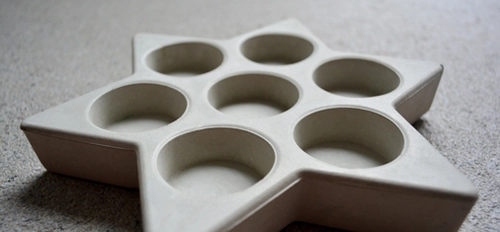
New grouting mortars Emcekrete 70 F and Emcekrete 100 F

4 Dec 2017

Nowadays, grouting mortars are regularly used on building sites, whether for grouting machine baseplates on a concrete foundation or rigid joints between precast concrete components and/or in-situ concrete. Now, MC-Bauchemie has launched two new high-performance grouting mortars onto the market in the form of Emcekrete 70 F and Emcekrete 100 F, both offering outstanding flowability combined with high strength values, low shrinkage and exceptional resistance.

Because of its fine, aesthetically attractive surface quality and easy workability, Emcekrete 70 F is ideally suited to the manufacture of small crafted concrete products such as the tea light holder and wardrobe element illustrated here. <br>© MC-Bauchemie 2026

Because of its fine, aesthetically attractive surface quality and easy workability, Emcekrete 70 F is ideally suited to the manufacture of small crafted concrete products such as the tea light holder and wardrobe element illustrated here. MC-Bauchemie 2026

Emcekrete 70 F and Emcekrete 100 F are based on an innovative binder matrix developed by MC-Bauchemie that promotes high flexural and compressive strength together with exceptional resistance and durability. The ideally coordinated, micro-fine particle grading of the two grouting mortars results in optimised packing densities down to the micron range. Both these high-performance grouting mortars are chloride-free. They just have to be mixed with water to be ready to use. They are pumpable and, once solidified, water-impermeable, resistant to frost and de-icing salt, fully shrinkage-compensated and non-combustible in accordance with EN 13501 (building material class A1). Grouting depths of 10 to 75 mm can be achieved with both products.

Emcekrete 70 F for high early and final strength values combined with an attractive surface finish

Emcekrete 70 F is a highly flowable, low-shrinkage grouting mortar which achieves both high early and high final strength values. After just two to four hours, it develops compressive strength levels in excess of 10 N/mm²*. After 28 days, this figure will have increased to more than 70 Nmm2*. It is ideal for the grouting of precision machinery, power generating plant and machine foundations for units such as turbines, generators, compressors and motors that are exposed to high dynamic loads, plus anchors, supports, steel and concrete columns and bridge bearings. It can also be used for the grouting of steel constructions, fixing bolts, steel fasteners and reinforcing bars in concrete (in compliance with the strict requirements of EN 1504: Part 6) and also of rigid joints between precast components and/or in-situ concrete, not to mention wind power generators.
This grouting mortar likewise offers extensive scope for design in a wide range of applications: exhibiting easy workability, a fine and aesthetically attractive surface quality and ready suitability for pigmentation, Emcekrete 70 F is also suitable for the manufacture of small crafted concrete products such as washbasins, lamps, candelabras and even concrete jewellery. 

Emcekrete 100 F for ultra-high final strength values

Emcekrete 100 F is ideal for applications requiring ultra-high final strength values. In the first 24 hours, Emcekrete 100 F already achieves standard levels of flexural and compressive strength of 7.5 and 42 N/mm2* respectively. Exceptionally high compressive strength values of 100 N/mm2* are achieved after seven days, rising to over 120 N/mm2* after 28 days. Emcekrete 100 F, like Emcekrete 70 F, can be used for grouting precision machinery, machine foundations, steel components and similar. In addition, this high-performance mortar is particularly suitable for the grouting of wind power generators. Emcekrete 100 F further fulfils the requirements of the German Committee for Structural Concrete (DAfStb) guideline for the “Production and use of cement-bound grouting concrete and grouting mortar” in Germany.


* at 20 ° C and a relative humidity of 65 %

pageImpression = pageImpression + 1; }); barba.init({ preventRunning: true, timeout: 5000, /* for debuggin usi this parameters debug: false, logLevel: 'debug', */ /*sync: true,*/ // define a custom function that will prevent Barba // from working on links that contains a `prevent` CSS class prevent: ({ el, event, href }) => { if (!el) { return false; } if (el.href && el.href.includes('landingpages')) { return true; } if (el.classList && el.classList.contains('prevent')) { return true; } return false; }, preventScroll: true, scroll: false, views: [], transitions: [ { name: 'header-transition', sync: false, from: { custom: ({ trigger }) => { if (trigger.classList && trigger.classList.contains('headerFlip')) { transistionImage = trigger.getElementsByClassName("transitionImage")[0]; if (typeof transistionImage == "undefined") { return false; } transisitionEffect = getRandomInt(1); return true; } return false; } }, async leave(data) { if (transistionImage === null) return; // can be null, return if null to not throw an error if ( transisitionEffect == 0) { const done = this.async(); let element = transistionImage; let state = Flip.getState(element); let headerImage = document.getElementById('headerImage'); headerImage.removeChild(headerImage.getElementsByTagName('img')[0]); let headerContent = document.querySelector('.headerContent'); gsap.to(headerContent, { opacity: 0, }); let content = document.querySelector('.content'); gsap.to(content, { opacity: 0, }); headerImage.appendChild(element); scroll(0,0); Flip.from(state, {duration:0.9, ease: "power1.inOut", scale: true, absolute:true,}); await delay(900); // Der await Operator wird genutzt, um auf einen Promise zu warten. Er kann nur in einer async Funktion benutzt werden. done(); } }, enter(data) { window.scrollTop = '0'; let content = data.next.container.querySelector('.content'); gsap.from(content, { opacity: 0, }); let headerContent = data.next.container.querySelector('.headerContent'); gsap.from(headerContent, { opacity: 0, delay: 0.5, }); }, after(data) { } }, { name: 'microsites_sliding_scroll', sync: true, from: { custom: (data) => { const { trigger, current, next } = data; function getParent(pathname) { const parts = pathname.split('/').filter(part => part !== '') return parts.length > 1 ? parts[parts.length - 2] : parts[0] || null } if (trigger === 'popstate' || trigger === 'back' || trigger === 'forward') { return false; } if(trigger.classList.contains('microsites_sliding_scroll') || trigger.classList.contains('sliding_scroll')){ return true; } if(current.namespace == 'template_138' && next.namespace == 'template_138') { return getParent(current.url.path) === getParent(next.url.path) } return false; } }, to: { namespace: [ 'template_120', 'template_138', ] },async leave({ current, next, trigger }) { const debug = window.debug; if (debug) console.log('Debug mode enabled'); const done = this.async(); const menuindexCurrent = +current.container.querySelector('[data-menuindex]').dataset.menuindex; const menuindexNext = +next.container.querySelector('[data-menuindex]').dataset.menuindex; const nextContent = next.container.querySelector('.content'); const currentContent = current.container.querySelector('.content'); let xPerc = menuindexCurrent < menuindexNext ? 100 : -100; const navbarHeight = document.querySelector('.navbar').offsetHeight; const pageHeight = document.querySelector('.header').offsetHeight; const nextContentHeight = nextContent.offsetHeight; const totalHeight = nextContentHeight + navbarHeight + pageHeight; document.body.style.minHeight = `${totalHeight}px`; const targetScrollY = trigger.classList.contains('microsites_sliding_scroll') ? pageHeight - navbarHeight : pageHeight + navbarHeight; const top = trigger.classList.contains('microsites_sliding_scroll') ? '0px' : '116px'; gsap.set(next.container, { xPercent: xPerc, position: 'absolute', top: top, left: 0, display: 'block' }); const tl = gsap.timeline({ onComplete: () => { gsap.set(current.container, { display: "none" }); gsap.set(next.container, { clearProps: 'position,top,left,xPercent' }); gsap.set(nextContent, { clearProps: 'xPercent' }); document.body.style.minHeight = ''; done(); } }); tl.to(currentContent, { xPercent: -xPerc, duration: debug ? 5 : 0.5, ease: "power1.inOut", }, 0); tl.to(nextContent, { xPercent: -xPerc, duration: debug ? 5 : 0.5, ease: "power1.inOut" }, 0); tl.to(window, { scrollTo: { y: targetScrollY }, duration: debug ? 5 : 0.5, ease: "power1.inOut" }, 0); }, enter({ next }) { gsap.from(next.container, { opacity: 0, }); } }, { name: 'microsites_sliding', sync: true, from: { custom: ({ trigger }) => { if (trigger === 'popstate' || trigger === 'back' || trigger === 'forward') { return false; } if(trigger.classList.contains('microsites_sliding')){ return true; } return false; } }, to: { namespace: [ 'template_120', ] }, async leave({current, next}) { const done = this.async(); const tl = gsap.timeline({onComplete: ()=>{ gsap.set(next.container, {clearProps: 'all'}) gsap.set(next.container.querySelector('.content'), {clearProps: 'all'}) }}) const currentContent = current.container.querySelector('.content') const nextContent = next.container.querySelector('.content') const currentH1 = document.querySelector('.currentPagetitle') const currentIntrotext = document.querySelector('.currentIntrotext') const nextH1 = next.container.querySelector('.pageTitle') const nextIntrotext = next.container.querySelector('.introtext') gsap.set(next.container, { xPercent: 100, position: 'absolute', top: 0, left: 0 }) tl.to(currentContent, {xPercent: -100, opacity: 0, duration: 1, ease: "power1.inOut", onComplete: () => { gsap.set(current.container, { display: "none" }); }}, 0) .to([currentH1, currentIntrotext], { opacity: 0, duration: 0.5, ease: "power1.inOut", onComplete: () => { currentH1.innerText = nextH1.innerText; currentIntrotext.innerText = nextIntrotext.innerText; }}, 0) .to([currentH1, currentIntrotext], { opacity: 1, duration: 0.5, ease: "power1.inOut" }, 0.5) .to(nextContent, {xPercent: -100, duration: 1, ease: "power1.inOut"}, 0) await delay(1000); done(); }, enter({next}){ gsap.from(next.container, { opacity: 0, }); } }, { name: 'default', sync: false, async leave(data) { const done = this.async(); gsap.to(data.current.container, { opacity: 0, duration: 0.5, }); await delay(500); // Der await Operator wird genutzt, um auf einen Promise zu warten. Er kann nur in einer async Funktion benutzt werden. scroll(0,0); done(); }, enter(data) { window.scrollTop = '0'; gsap.from(data.next.container, { opacity: 0, duration: 0.5, }); }, after(data) { // START: Ankur - 15062023 - For Scroll Position History if(scrollHistory[data.next.url.href]) { let scroll = scrollHistory[data.next.url.href]; window.scrollTo({top: scroll.y, behavior: 'instant'}); } // END: Ankur } }, { name: 'self', enter() { }, } ] }); });