 Germany
 Austria
 Belarus
 Belgium
 Bosnia and Herzegovina
 Bulgaria
 Croatia
 Czech Republik
 Denmark
 Finland
 France
 Georgia
 Great Britain
 Hungary
 Ireland
 Latvia
 Lithuania
 Netherlands
 Poland
 Portugal
 Romania
 Serbia
 Slovakia
 Spain
Spain
 Sweden
 Switzerland
 Ukraine
 Ethiopia
 Ghana
Ghana
 Egypt
Egypt
 Guinea
 Israel
 India
India
 Kazakhstan
 Malaysia
 Singapore
 United Arab Emirates
 Vietnam
 Taiwan
 Philippines
 New Zealand
 Australia
 Canada
 Brazil
 Paraguay
 Uruguay
 Bolivia
 Chile
Chile
 Peru
Peru


Special Feature
System solutions for hydraulic structures
Special Feature
System solutions for hydraulic structures
System solutions for hydraulic structures
1 Sep 2026
Locks, storm surge barriers and ship lifts are indispensable elements of modern water infrastructure. They are exposed to extreme stresses caused by water, chlorides and weathering over decades. At the same time, many existing structures now need to be repaired while remaining in operation. Durable and cost-effective solutions are therefore essential. MC-Bauchemie provides system solutions worldwide for the construction, protection and repair of hydraulic structures of this kind. Its portfolio ranges from concrete technology, concrete replacement and sprayed concrete to surface protection and injection systems.
Whether locks, storm surge barriers or ship lifts, hydraulic structures are among the most demanding civil engineering structures. They safeguard trade routes, protect coastal regions against flooding and ensure the reliable operation of major waterways. At the same time, they are exposed to extreme stresses: water, chlorides, freeze-thaw cycles, abrasion, fluctuating water levels and high mechanical loads affect the concrete and reinforcement over decades. Another particular challenge is that many of these structures were built several decades ago and now need to be repaired or modernised without compromising their essential function. For operators, the main priorities are durability, cost-effectiveness and minimising downtime.
MC-Bauchemie supports owners, planners and contractors worldwide with system solutions for the construction, protection and repair of hydraulic structures. The portfolio ranges from concrete technologies, repair mortars and sprayed concretes to surface protection systems, injection solutions and specialised coatings. Current projects involving lock construction, coastal protection and structural maintenance demonstrate how this holistic approach works in practice.
Hydraulic engineering imposes special requirements
Unlike many other infrastructure projects, hydraulic structures are permanently exposed to moisture or are in direct contact with water. Coastal structures are also exposed to chlorides and saline air. Locks and ship lifts must accommodate constantly fluctuating water levels, while dams and storm surge barriers must withstand enormous hydrostatic loads. At the same time, sustainability and cost-effectiveness requirements are becoming increasingly demanding. Operators expect structures with the longest possible repair intervals and predictable life-cycle costs. A holistic approach is therefore crucial — one that does not view new construction and maintenance separately, but understands them as an integrated process.
System expertise throughout the entire life cycle
MC’s strength lies in combining different technologies into coordinated system solutions. During new construction, high-performance concrete admixtures support the production of durable and resistant structures. For repair work, concrete replacement systems, dry-spray concretes, injection systems and surface protection solutions are available and can be precisely matched to the relevant exposure conditions. This makes it possible to support hydraulic structures throughout their entire life cycle—from planning and execution to long-term preservation.
Construction of a key facility: the fifth lock chamber in Brunsbüttel
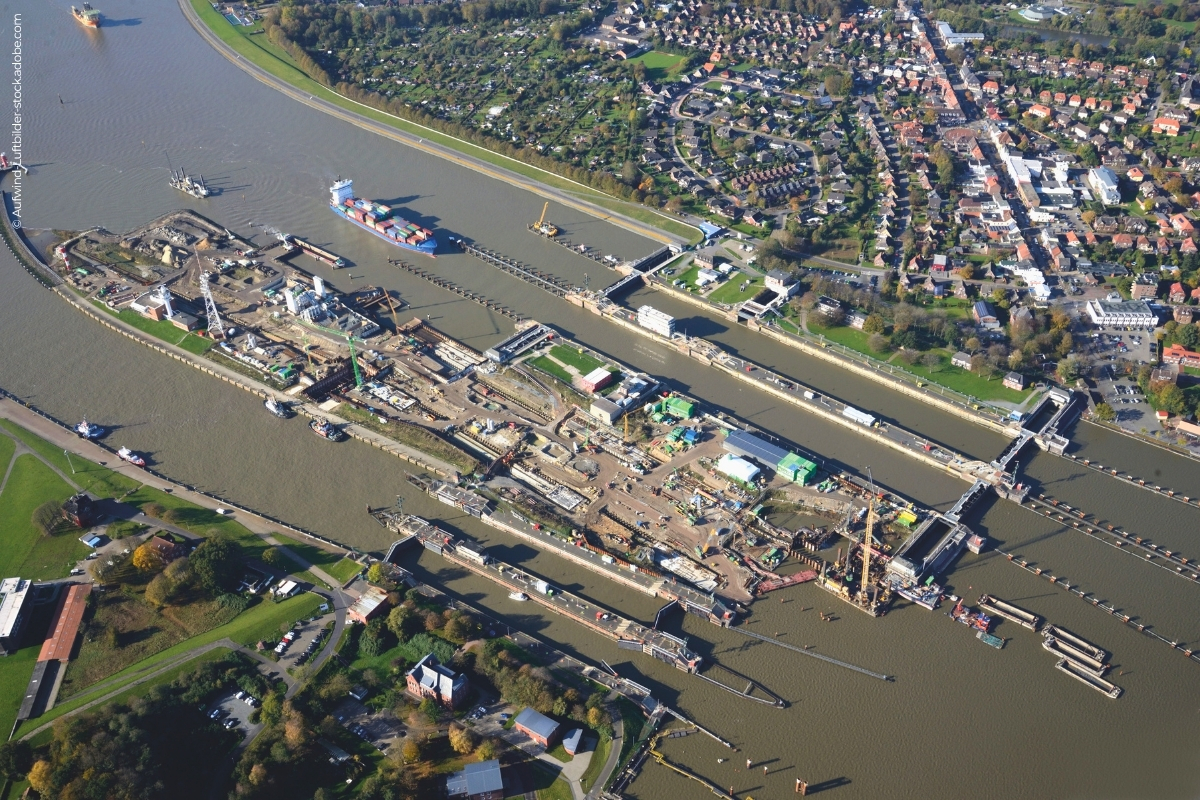
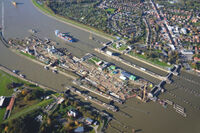
A current example of the importance of modern concrete technology is the construction of the fifth lock chamber in Brunsbüttel on the Kiel Canal. Since 1895, this waterway has connected the North Sea with the Baltic Sea and remains one of Europe’s most important artificial waterways. The lock facility in Brunsbüttel forms the western entrance to the canal and is therefore a central hub for European shipping. As the large lock chambers have been in operation since 1914 and will require extensive repairs in the coming years, an additional high-capacity fifth lock chamber is being constructed between the existing facilities. The project is one of Germany’s most important infrastructure schemes and is intended to secure the future availability of the waterway while enabling the existing facilities to be refurbished in stages.
The major project was planned in 2007 and 2008, the construction contracts were awarded in 2014, and construction began in 2015. With a usable length of 330 m, a width of 42 m, a sill depth of up to 14 m below mean sea level and a concrete volume of more than 100,000 m3, the structure is one of Germany’s largest hydraulic engineering projects. It is currently scheduled to open to shipping at the end of 2026. The demanding conditions – including restricted space, ongoing shipping traffic, tidal influences and massive concrete components – require precisely coordinated concrete technology. MC is supporting the project with a comprehensive portfolio of superplasticisers, plasticisers, retarders and air-entraining agents, as well as solutions for curing and repairs. In this way, the systems help ensure reliable application, controlled construction processes and permanently resistant concrete structures.
Durability under extreme conditions: the Eider Barrage
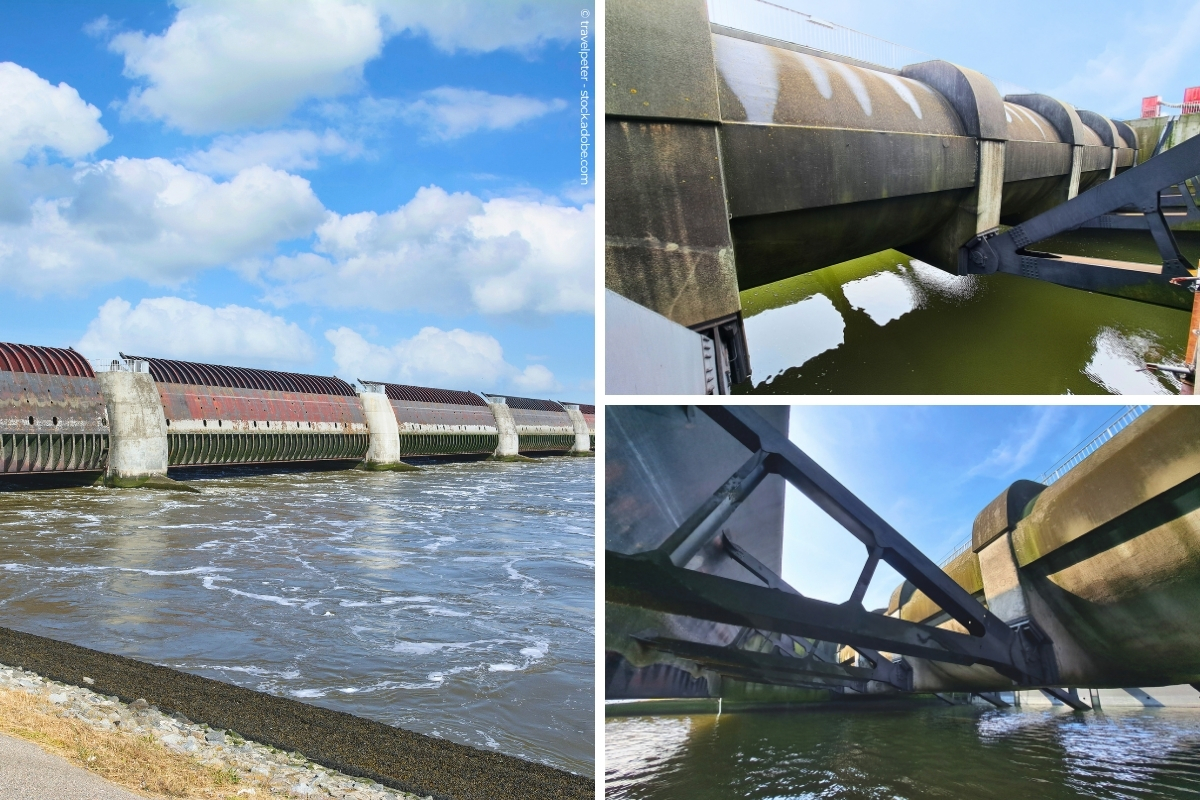
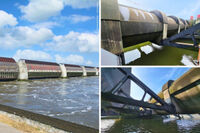
While Brunsbüttel represents new construction, the Eider Barrage provides an impressive example of the importance of long-term protection systems for existing structures. Germany’s largest coastal protection structure protects extensive areas of Schleswig-Holstein against storm surges and the effects of the North Sea. Around three decades ago, major concrete surfaces were protected using the Zentrifix F 92 surface protection system. Recent investigations confirm the exceptional durability of this solution under the extreme conditions of a marine environment. The results demonstrate that effective protection of concrete surfaces can be maintained even after decades of exposure. The planned recoating of selected areas highlights a fundamental principle of modern maintenance strategies: the focus is not on replacing the structure, but on preserving it over the long term through suitable protection and repair measures.
Scharnebeck ship lift: repairs during ongoing operation
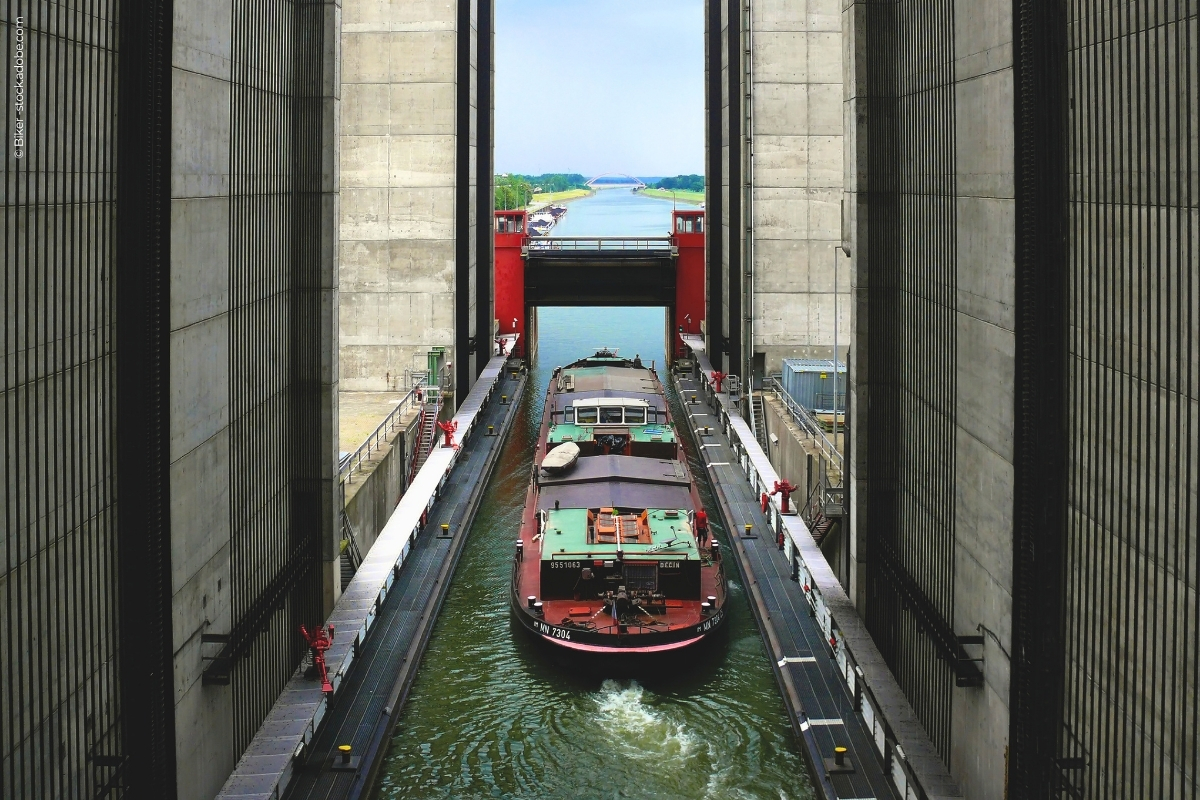
Another example of the complexity of modern hydraulic engineering projects is the Scharnebeck ship lift near Lüneburg. This impressive structure is one of Europe’s most important ship lifts and forms a key part of the waterway connection between the River Elbe and the Mittelland Canal. High-performance dry-spray concrete systems from the Nafufill range are being used in the ongoing repair work. They enable damaged concrete areas to be restored cost-effectively and durably, even under demanding construction-site conditions. In addition to technical performance, logistics, application reliability and close coordination between the client, planner and contractor also play a decisive role in projects of this scale. This is precisely where the advantages of a system provider become apparent: products, application expertise and project support are all supplied from a single source.
Sustainability begins with durability
In hydraulic engineering, sustainability is closely linked to the service life of a structure. Every major refurbishment that can be avoided saves significant quantities of materials, energy and CO₂. At the same time, the necessary closures and disruptions to ongoing operations are reduced. Durable protection systems, high-performance concrete technologies and cost-effective repair concepts therefore make a significant contribution to conserving resources. They extend the service life of existing infrastructure and help protect investments over the long term.
Infrastructure for generations
Hydraulic structures are among the most important and, at the same time, most demanding elements of modern infrastructure. Whether constructing a new lock, protecting a coastal barrage or repairing a ship lift, the key is a holistic approach that integrates planning, construction and preservation. With its broad portfolio of concrete technology, repair systems and surface protection solutions, MC-Bauchemie supports hydraulic engineering projects throughout their entire life cycle. The resulting solutions not only meet today’s requirements but also safeguard the functionality of major waterways for generations to come.
RELATED CONTENT
Specialised systems for tunnelling and mining
Tunnelling and mining projects are among the most challenging construction projects worldwide. They are carried out in areas where infrastructure is being developed, new transport corridors…
MC sets new standards in efficiency, performance & sustainability
Multi-storey car parks are a true stress test for coating systems. Hardly any other area of use combines so many requirements for function, protection and design: mechanical loads from…
New concrete replacement Nafufill GTS HS rapid
The time window available for repairing hydraulic and sewerage structures is frequently restrictive. And the case of structures in tidal waters, time becomes even more critical – a…
More
